Hey, AI! leave my em dash alone
But first:
I ❤️ Minneapolis
I want this newsletter to be a place of rest, renewal, and hopefully a call to optimistic creation. So I try not to lean into news & politics. But as I write this, some of our fellow citizens are out braving Arctic conditions, and so very much more, to reject the stinking rot of fascism:
It’s -9 degrees. Downtown Minneapolis is packed for the anti-ICE rally and the crowd keeps growing
— max nesterak (@maxnesterak.bsky.social) 2026-01-23T20:16:05.929Z
As an introvert, action is sometimes hard for me. I don’t know what to do, or where to start. Luckily some friends have told me about two services to help the average citizen be heard, so at least I can do something:
Resist.bot
The Easiest Way to Be Heard
Send the word resist to Resistbot on Apple Messages, Messenger, Instagram, Telegram, or by text to 50409 and answer the questions texted back. In minutes, you’ll have contacted Congress or your other elected officials. Make your letter open for maximum effect.
5calls.org
We’re the team making advocacy accessible.
5 Calls makes it easy for you to reach your members of Congress and make your voice heard. We research issues, write scripts that clearly articulate a progressive position, figure out the most influential decision-makers, and collect phone numbers for their offices. All you have to do is call.
I don't care what "side" you're on. You need to be heard, because I have faith in your true, fearless heart.
Meanwhile, back to my oeuvre of topics that don’t really matter, but which I’ve spent a chunk of time thinking about.
The em dash is for humans
You may have heard that the em dash – here’s a couple for you right now – has come under fire for being a supposed marker of AI-generated text. People have gone so far as to recommend never using the em dash, to show that you are indeed a human.
Madness. What’s next? Exclamation points? The letter “c”? Admittedly, “s” and “k” could easily pick up the slack…but that’s not the point!
Now, there are a lot of punctuation marks. A lot, including the Mongolian Full Stop, the Wave Hyphen, the Wavy Hyphen, and the Hyphen with Diaeresis.
Does your hyphen have diaeresis? Then reach for the comfort of Pepto Bismark, the number one product for fast, punctual relief!

The em dash and breathing
I’ve written 6-7 radio plays, and dialog for a lot of short films. And I’ve spent a lot of time listening to others interpret what I’ve written. This is part of the joy of writing a play. I love sitting listening at a table read while others literally breathe life into the little squiggles I had made on the page.
When I squiggled those squiggles marks, I had a specific cadence in mind, specific stresses on specific words. I had performed it in my head, and often out loud. And for the most part, I’m delighted when someone riffs a rhythm on the line I hadn’t thought of.
Remember, this was mostly community theater. The artists weren't getting paid, they were there to have fun and to learn. Insisting that it was all deathless prose, and that they need to “just say what’s on the page,” would have really harshed the vibe. I am neither Shakespeare nor Sorkin.
But sometimes, I needed the actors to deliver a line or exchange exactly as I originally heard it. Maybe it was to pull another laugh out of that same joke, or to provide some character insight, or to establish a plot point we would circle back to later.
So how do I bake in the “read" when needed?” I just make notes in the script, whaddya call ‘em, stage directions, right?
The awful truth about stage directions
Here’s a quick example of stage directions (the stuff in italics):
JEFF
(angrily)
Where is my waffle?
(calms himself, then)
Do you know where the waffle is?
There are two problems with this approach:
- Thats a lot of hand holding. If the actor playing Jeff hasn’t figured out that Jeff would be angry about his missing waffle based on every other line Jeff has had up til now, then I haven’t done my job as a writer. (Unless Jeff has a hitherto undiagnosed case of waffle-based lycanthropy, in which I probably should pop a little note in there. Just as a heads-up.)
- To make matters worse, an actor friend of mine told me that the first thing he and other actors he knew would do with a new script is cross out all the stage directions. They felt it was their job to discover the character through what the characters said and did on the page, and not from some parenthetical micro-managing.
So I rarely use directional notes in a script – except for, you know, cases of waffle-based lycanthropy. Does that mean I just put the scripts out there, no hints, no guidance as to cadence and rhythm?
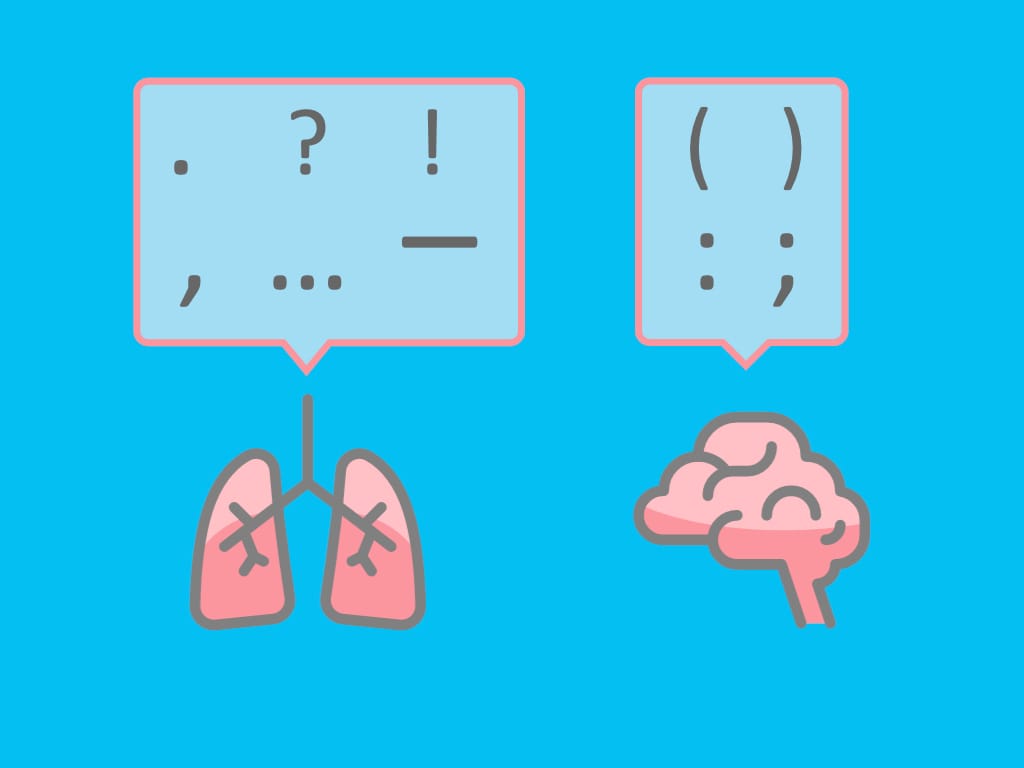
Not at all. I found I could establish cadence and rhythm with just six punctuation marks. That’s all I use in scripts, and I make sure to use them in the same way each time on the page.
Punctuation of the breath
Remember, I’m writing dialog. A human is going to use their lungs to vibrate a couple of flaps in their throat to create a tone, which they will then shape with their tongue, teeth, nose, and skull.
So in a sense, I’m trying to influence how the actor will breathe. Now, if you talk with Shakespearean actors, directors, and dramaturges about breath control, they will have a lot to say. Shakespeare wrote mostly in unrhymed iambic pentameter, so his dialog is a form of poetry that the actor has to be aware of.
My stuff, not so much. I’m mostly trying to get actors to tell jokes about cowboys herding blueberries, opera singers with literal frogs in their throats, and a script-writing gorilla (my cameo).
So here’s the six marks I use when writing dialog:
| mark | name | use |
|---|---|---|
| . | period | also called the full stop, cause that's what it does |
| ? | question mark | turns line into a question - usually rising tone |
| ! | exclamation point | rare, but useful when intensity is sudden |
| , | comma | shapes rhythm within a line |
| ... | ellipsis | use instead of a period when there is a pause after a line |
| — | em dash | use to indicate the next line should be right after or even interrupt |
Sure there’s more punctuation marks out there. What about the colon? The semi-colon? Parentheses? All the other dozens and dozens of marks listed in the Unicode Standard as “common?"
Well, all those marks are more designed to be seen, not heard. Sure, they will effect the vocal delivery if you’re reading them out loud, but only subtly. But the other marks are punctations of the mind, not the breath. They’re subtle, and can be an unclear communication from me to the actor.
Why I really love the em dash
I’m a huge fan of screwball comedy. The Marx brothers, Danny Kaye, the Coen brothers, Wes Anderson. Snappy dialog, crazy situations, last-minute happy endings. What’s not to love? I’m just trying to follow in the footsteps of giants.
And that snappy dialog? It has to come at the audience fast. The characters should almost, if not actually, interrupt each other. The em dash is a visual cue from me to the actors that stepping on each other’s line is OK, even desired. And they don’t need to worry about interrupting if there’s supposed to be a pause – that’s what the ellipsis is for.
Of course, the period gets the most use. By my ol’ buddy em dash is there when I want to the cast to really “pick up their cues.”
Here’s a short excerpt from Firesign Theater’s immortal comedy, Nick Danger: Third Eye, on the importance of picking up one’s cues.
BUTLER
All right, come in out of the cornstarch and dry your mukluks by the fire.
SOUND EFFECT (Crumpling cellophane for fire)
BUTLER (cont’d)
Let me introduce myself. I am Nick Danger.
NICK
No, let me introduce myself. I am Nick Danger.
BUTLER
If you're so smart, why don't you pick up your cues faster?
NICK
Are those my cues?
BUTLER
Yes, and they must be dry by now. Why don't you pull them up out of the cellophane before they scorch.
SOUND EFFECT (Crumpling cellophane stops)
My triumphant conclusion
See? Beloved icons of comedy agree with me – snappy dialog means picking up your cues. And the em dash is here to help keep things snappy.
Fun facts to know and share
Did I mention I love mechanical stuff?
 Grace Ebert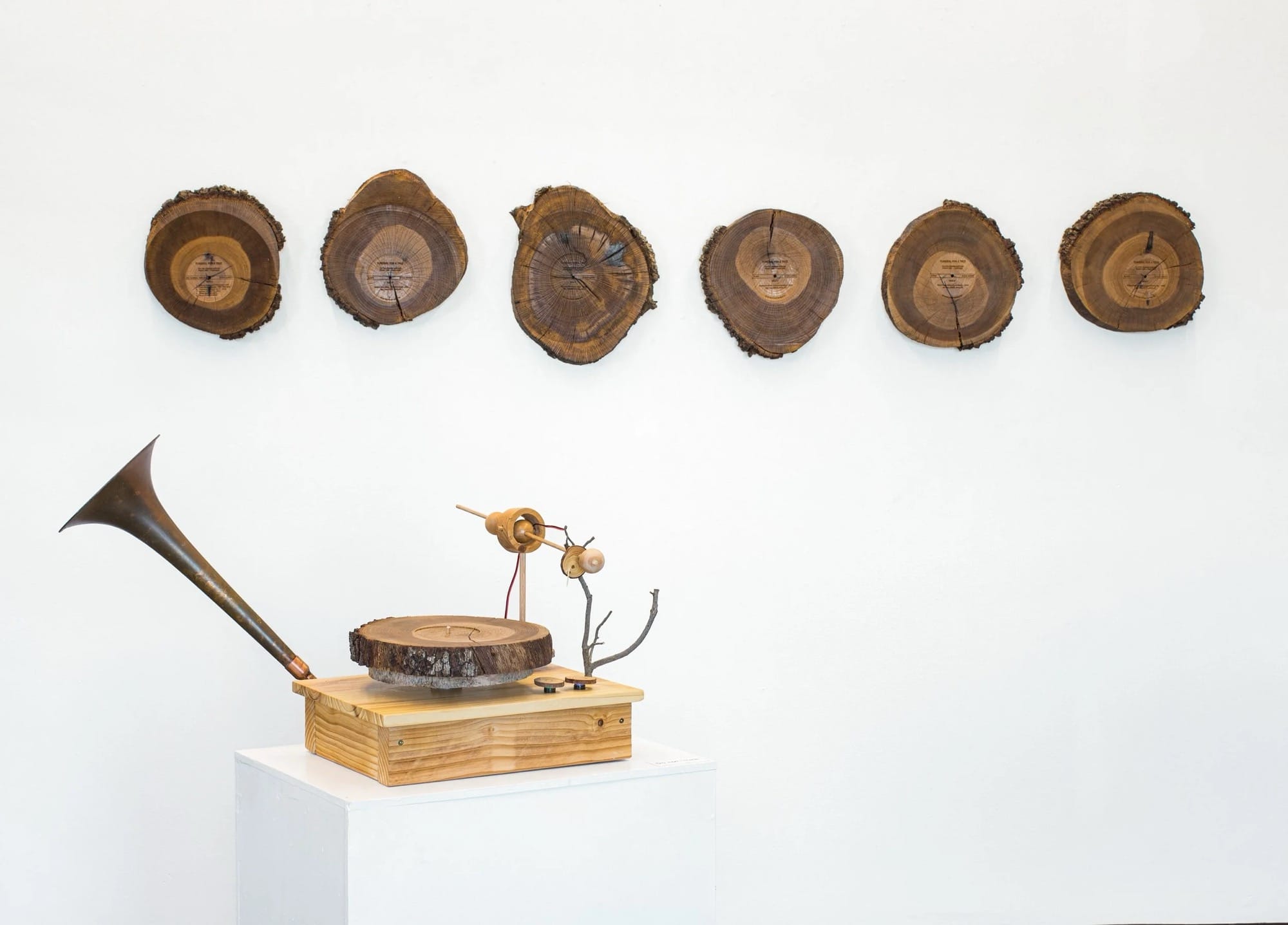
Who wants a wood phonograph? I do!
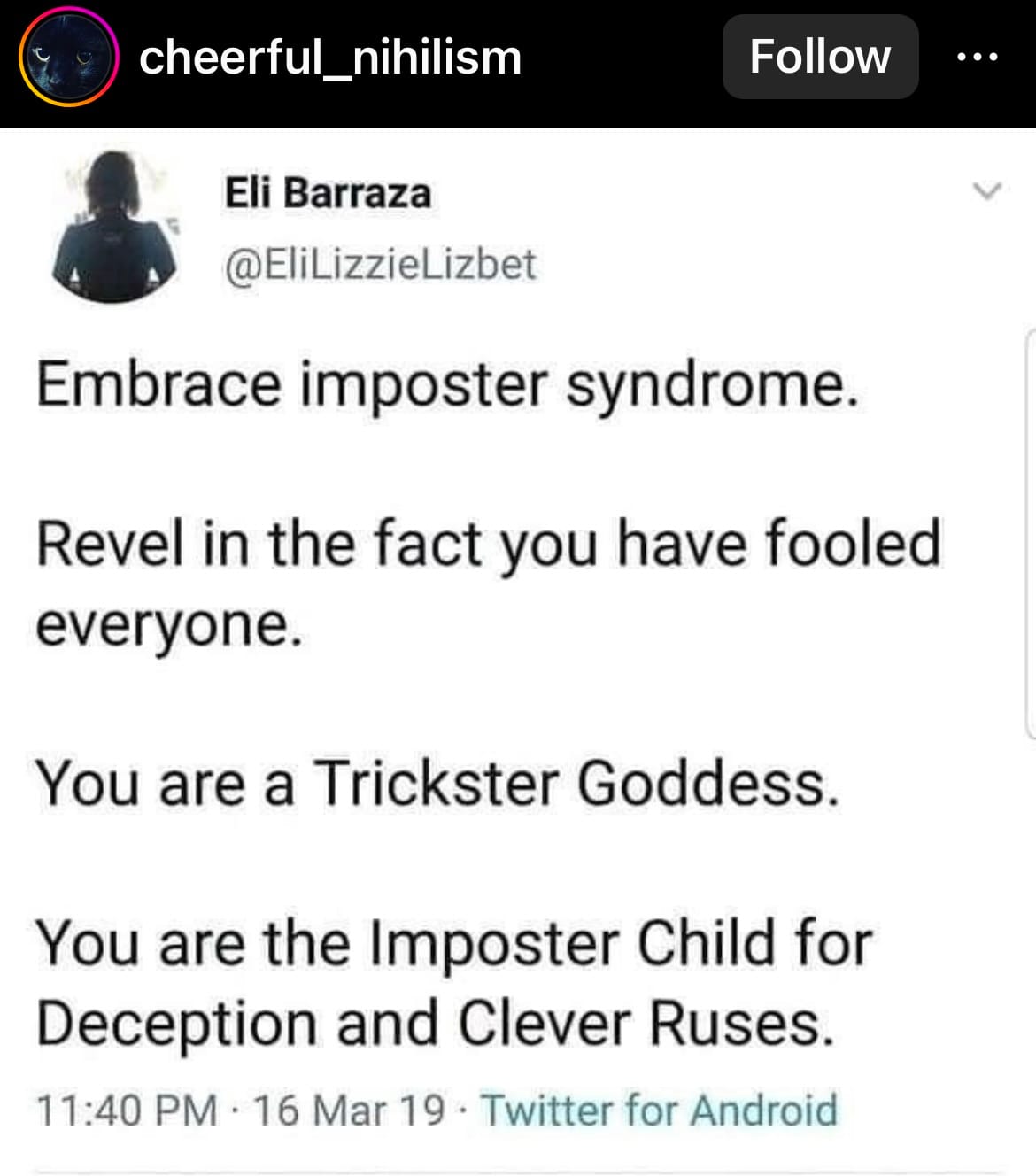
A role model.
 Mariah Rush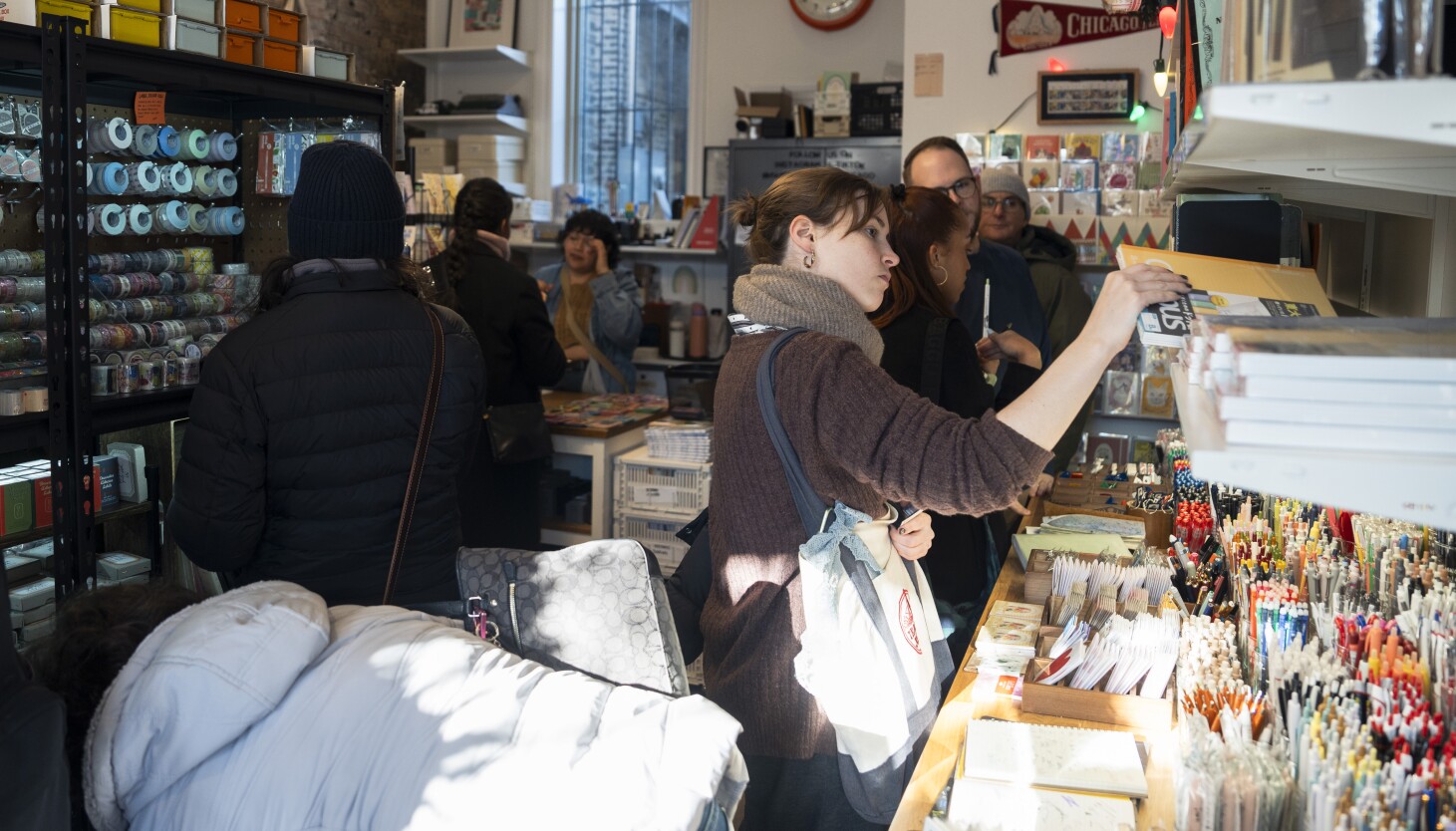
Speaking as a guy who just switched back to a paper planner, this is fun to see.
Over to you
I’m going to sign off with a quote and a reminder.
First, this quote from Painter Vincent van Gogh on hope (from "The Letters of Vincent van Gogh,” via James Clear):
"Many people seem to think it foolish, even superstitious, to believe that the world could still change for the better. And it is true that in winter it is sometimes so bitingly cold that one is tempted to say, "What do I care if there is a summer; its warmth is no help to me now."
Yes, evil often seems to surpass good. But then, in spite of us, and without our permission, there comes at last an end to the bitter frosts. One morning the wind turns, and there is a thaw. And so I must still have hope."
Second, the reminder is that sometimes depression is just repressed anger. And anger, channeled healthily, can be a source of energy.
No one’s coming to save us. But we have the energy to create our own thaw.
I’ll be honest, I’m saying this mostly to reassure and motivate myself. If you find it useful I’m glad. Thanks for letting me talk this out.
Until we talk again, I remain,
Your pal,
Jamie